Thursday, January 4, 2024

Overlooked yet Brightly Shining: The Impacts of Ecological Light Pollution

Source: 1920x1080 Resolution Forest Milky Way Night Reflection over River 1080P Laptop Full HD Wallpaper - Wallpapers Den

The night sky used to be pure wonder.  A person would gaze upwards on a clear night and see a huge spectacle of stars and the soft glow of the brushstroke that is the Milky-Way.  The night was the pure opposite of day, it held safety for nocturnal animals and provided a respite for the species that spent their energy during the day.  What do you see when you go outside at night now?  How many stars do you see?  Is it thousands?  Hundreds? A couple dozen?  It is most certainly not the same night sky that your ancestors looked at hundreds of years ago.  What you probably see is only a smattering of the brightest stars and the glow of the nearest cities on the horizon.  The night has lost its darkness.  Light Pollution is to blame, which is defined as "a broad-scale phenomenon, with hundreds of thousands of light sources cumulatively contributing to increased nighttime illumination of the sky".  As the earth lights up at night, it becomes more and more difficult to see the stars and experience natural darkness on our planet.  The Earth's atmosphere reflects back the terrestrial light sources, creating an effect called sky-glow, which outcompetes the light from the stars and moon.

Light pollution is an issue that only grows worse; it is estimated that every year it expands by 3-6%.  In 2016, 1/3 of the Earth's population was unable to view the Milky Way; 3/5 Europeans and 4/5 North Americans cannot see the Milky Way when they step outside of their homes.  The proliferation of light pollution has been driven by affordability of new lighting and development of technologies that allow lights to be brighter.  As lights became cheaper, paradoxically the consumption and abundance increased exponentially, so that the potential savings of affordable technologies was never realized; this demonstrates an economic trend called Jevon's Paradox.  The newer cheaper lights (LEDS) emit blue-light wavelengths, which is reflected in our atmosphere more readily than other wavelengths and thus increases the amount of sky-glow at night.

For a long time, the only complaints regarding light pollution were regarding difficulties with astronomical observations and night-time ascetics.  Scientists viewing celestial bodies and looking to understand outer space were having a tougher time making their observations.  People around the globe noticed that the night sky was brighter and less beautiful to regard.  However, as time went on and the night sky continued to brighten, more effects became apparent that were more worrisome.  Nocturnal animals found less safety in the night then they were accustomed to.  Sleep cycles were disturbed and species were out when they should have been safely hidden in their burrows or dens.  Soon, it was found that ecosystems and biological processes worldwide were under threat of being significantly disturbed by the loss of natural darkness.

Saturday, July 16, 2022

From Ferocious to Fido: The Complex and Elusive Pathways of Animal Domestication

It is an occurrence that many of us have experienced: the day that we come into contact with the questionable pet.  Perhaps we are at a someone's house who we do not know too well, and they decide to show us their boa constrictor.  Or, in the background of your boss's zoom screen, you see a large cage filled with colorful tropical birds.  Or maybe you are just scrolling through Instagram or Facebook, and you see a heartwarming video about a man and the raccoon that follows him around his farm.  You enjoy seeing the creature scurry, slither, or flutter but something scratches in the back of your mind.   Is it appropriate that this animal is kept as a pet?  The animal seems calm and at ease, but does that mean it is domesticated?  What exactly is a domesticated animal?  How do we separate them from wild animals?  The questionable pet brings up confusion about which animals are supposed to live with us or in our society, and which are better off being left in the wilds where we found them. 

Is this a domesticated animal?
Source: Wikipedia


How about this one?
Source: Flickr


These questions are all valid ones because domestication is not a simple concept to wrap your head around.  Determining exactly when a species becomes domesticated is a convoluted and difficult task.  This may give you pause; we cannot tell domesticated and wild animals apart?  You could glance at your dog, asleep in their fluffy bed after a difficult afternoon of eating kibble and barking at nothing, and you think, "Well, there would be no mistaking Harvey over there with a wolf.  Why is there any confusion?"  However, the dog has had thousands of years of change thanks to domestication, forming it's obvious differences from the wolf.  But when exactly did the dog stop being wild and start being domestic?  What exact traits had to change in order to precipitate this shift?  Do all domesticated animals share these traits?  These finer details are what this article hopes to explore.

Sunday, May 31, 2020

The Coronavirus's Impact on our Parks and the Environment

Many have flocked to the outdoors during the pandemic
Source: 303magazine.com


The Coronavirus is affecting everything.  This statement is one I am getting a bit tired of reading in the news, but it is unfortunately true.  Mankind has expanded to the scale that our reach affects every corner of the globe; thus this new virus that is affect all of us will also be affecting the entire planet.  You have no doubt read countless articles speculating on the impacts on the economy, the education system, the health care system, and government.  But what about the natural environment and places like parks and reserves?  How will they fare amongst this global pandemic?

Simple logic may lead you to infer that parks and other natural places will do quite well.  Without all the people mucking about, it would make sense that these ecosystems would thrive.  But people are also the protectors of landscapes, whether they be rangers, scientists, wardens, or volunteers.  Just as many of them have been sidelined by the creeping virus.  This makes the answer more complicated than a simple "good" or "bad", and in reality we can only really speculate.  Like most everything else, we will have to wait until time has passed to know how things are going to end up.  Yet even with all of this uncertainty, it is safe to say that the parks and the like are under threat under the coronavirus pandemic.

Tuesday, March 31, 2020

The Burned Land Down Under

Flames were coming for people in their beds, in the middle of the night, announced with the dire and haunting words we became used to over these terrible months.  "It's too late to leave; shelter in place" -Lisa Pryor
Australian Wildfires Illuminate the Night
followmehere.com

It may seem distant history, at the rate with which the world moves from disaster to tragedy, but a few months ago the world was watching the progress of massive wildfires that blanketed Australia.  We saw the pictures of charred landscapes, ashen ruins of homes, and burnt animals approaching responders for help.   We read the statistics of the unprecedented natural catastrophe that was sweeping across the smallest inhabited continent.  Three thousand homes destroyed in New South Wales, 46 million hectares (or 114 million acres) of land burned, and thirty-four lives lost.

Yet, while news flashes kept us abreast of the extent of the destruction, the reason for this tragic disaster was more elusive.  Why were these wildfires so bad?  Was this year somehow different than other years?  Will the fires continue to get worse?  These were questions that most articles did not try to answer.  Those affected were too focused on survival to worry about causes or consequences.  Thankfully, the fires have been subdued for the time being and restoration has begun.  Now Australia and the world can take a breath to wonder why this devastating force arrived at this place and time.

Saturday, January 11, 2020

The Wilderness Problem: The Need for a Modern Reevaluation

A Wilderness Scene from Denali National Park

The Grand Tetons, the geysers at Yellowstone, the African Savanna, the Great Barrier Reef, the Southern Alps of New Zealand; wilderness areas like these have become cherished in the popular mindset of recent years.  Tourists and adventurers flock to them in order to witness breathtaking views and rare ecosystems.  Environmentalists use them as lightning rods for their causes, citing the damage and threats to these places to push through legislation and protection.  We treasure wilderness now.  We use it to define our nations and utilize them for once-in-a-lifetime experiences of self-discovery.  It was not always this way.  The wilderness used to be thought of as a place of horrors, of danger, and of the other.  It was where children went missing, where monsters loomed, and where Jesus was tempted by Satan.  But, beginning in the 19th century in America, wilderness began to be thought of a finite resource and one worth celebrating.  It became a way to escape the pressures of modern society and this escape was being threatened by the ever encroaching mechanisms of industry.  The American frontier was disappearing and the protection of the few remaining pockets of wilderness became a desperate cause.

Eventually what emerged from this shift in attitude was the environmental and conservation movements.  Natural resources were no longer only to be exploited.  Wild places were to be preserved for their own sake.  Yet the otherness surrounding the wild remained.  Humans extolled the virtues of wilderness and nature, but they remained something apart from us that we could only ruin.  We created a dichotomy between the natural and the artificial or human.  Natural places became pure and pristine, while anything that contained the stain of human influence was deemed corrupted.

Recently, J.B. Callicott coined the phrase "the Received Wilderness Idea" to describe this way of thinking.  Its principles are simple.  Wilderness is nature as its most pure, with limited human influence, and such influence must be kept at an absolute minimum to preserve its purity.  On its surface, this philosophy seems a logical way to a manage wild places.  In truth, the Received Wilderness Idea is one of hidden falsehoods and flawed logic.  Despite our best intentions, human beings will always influence the natural environment and vice versa.  Creating walls around natural areas, physical and political, does not preserve them but isolates them to waiting dangers and isolates human beings from the natural around them.

Wilderness is in actuality a complete human construct.  While these areas may seem devoid of human interference, it is nonetheless there under the surface.  Wilderness exists because of the human histories of conquest, expansion, and relocation.  And now wilderness is deeply affected by our policies and impacts.  If human beings worldwide accepted the connection that wilderness has to mankind, it would greatly improve the manner in which we interact and manage these landscapes.  Like the shift in thinking that happened during the dawn of environmentalism, we need to change our mentality towards the wild and the remote.

Wednesday, May 1, 2019

How to Protect Our National Parks During a Shutdown? Keep Them Closed

Image result for national park closed
An Entrance of Yellowstone National Park during the 2013 Government Shutdown
Source: NPCA Photos, Flickr.com
A child peering through a locked fence at Lincoln Memorial.  A line of cars being turned away from campgrounds in a National Park.  These were the sort of images that spread across the media during the 2013 Federal Government shutdown.  The photos of unfulfilled family vacations and interrupted field trips fueled a large backlash against the Obama Administration, who had shut the parks and monuments down due to a lack of congressional funding.  When the Federal Government again shut down this year, the Trump Administration remembered the vitriolic tone of the images shared in 2013 and how they had been weaponized against their predecessors.  They looked to avoid such a backlash and appease the public, so this time they kept the gates open to some of our most precious national resources.

The gambit did not work.  A different backlash soon spread across the media.  Instead of faces of sad children, pictures of trash heaps were shared along with dirty bathrooms and mobs of cars.  The masses were allowed into the parks but there was little to no staff to control them.  The administration could not avoid the criticism and their decision caused damage to be wrought at numerous National Parks.  But public attention and the media cycle are both short, and the government shutdown now seems in the past.  Yet the effects of this tumultuous time will be felt in the National Parks and other protected lands for years to come.  The litter has been removed and the bathrooms are now clean, but it will take some time before the parks fully recover.

Wednesday, February 21, 2018

Beyond Taxes: Alternative Funding for Conservation Through Ecotourism

"(The National Park Service's) purpose is to conserve the scenery and the natural and historic objects and the wildlife therein and to provide for the enjoyment of the same in such a manner and by such means as will leave them unimpaired for the enjoyment of future generations" -- NPS Organic Act of 1916
"Why do I have to pay an entrance fee?  I pay taxes don't I?" -- Average Citizen at a Park Entrance, Every Country 

Entrance Fees Often Cause Bottlenecks into Nature Reserves, But Why Are They Necessary?
Source: The Chicago Tribune

Trouble at the Gates


 We often take nature for granted.  The expansive wilderness always seems like it is just outside our window.  We, as individuals, do not spend much time out there but we take solace in the fact that we could head out into the great outdoors whenever we please.  It can come as quite a surprise when, upon trying to do so, we find ourselves stopped at a kiosk with a friendly Park Ranger demanding ten dollars for the right to go romping through the forest.

People often respond indignantly to such a price.  How can it cost anything to visit a park?  Is it not the purpose of taxes to provide funding for government programs such as this?

The truth is that environmental conservation, preservation, and protection are globally underfunded.  For example, in 1994 it was estimated that all of the world's existing protected areas needed to be allocated $17 billion in order to be maintained in their present state.  Only $4.1 billion ended up being budgeted worldwide, compared to $245 billion that was budgeted for agricultural subsidies in the same year.  Right now, the US National Parks have a maintenance backlog with a projected cost of $11.3 billion.  This is why parks are understaffed and fees are required for entry.
Image result for National Park funding
A Graph of Funding for the National Forest Service's Recreation, Heritage, and Wilderness Programs Since 2001
Source: The National Wildlife Federation


This gets at an innate paradox within the conservation movement.  Conservation looks to sustain natural diversity to its highest potential, yet must also be financially sustainable and socially accessible to do so.  This is a hard balance to uphold; actions that are best for the health of the ecosystem often go against economic trends or the demands of the visiting public.  Additionally, environmental projects are expensive yet the bulk of governments' budgets are allocated to more popular issues like defense or infrastructure.  But conservationists do not have to solely rely on public funding.

It has been proposed that conservationists should partner with the tourism industry in order to make protected areas more accessible and more profitable.  Ecotourism and wildlife experiences have become highly popular as a growing urban population looks to find repose in beautiful sceneries and biodiverse areas.  Tourism is a $1.5 trillion industry globally, with environmentally themed programs making up 20-40% of these profits.  If conservation organizations could tap into these revenues, then their funding problems could be a thing of the past.

Friday, January 26, 2018

Trash-Picking and Traffic-Waving: The Truth About Being a Park Ranger

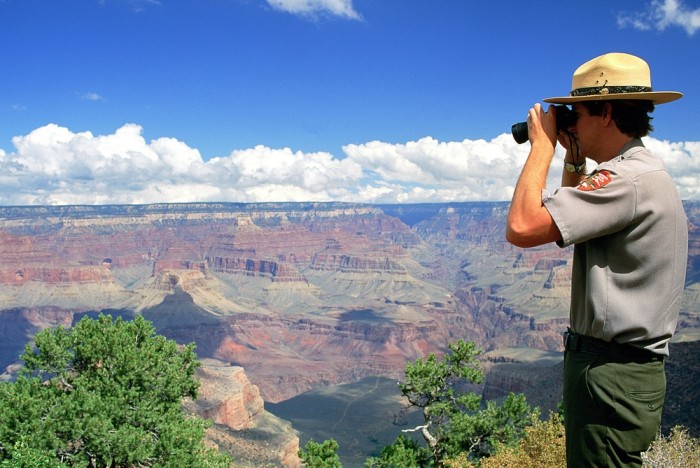
For most, the outdoors is a place for relaxation and recreation.  People head into its great expanse to take a leisurely walk, kayak a difficult river, climb a beautiful vista, or to hunt some elusive game.  Whatever one does when one is in nature, the goal is to take a break from a stressful and fast-paced life and to recuperate one's self.  Yet for some, nature is also a workplace.  These individuals have decided to turn their love for wilderness into a career and thus dedicated their time to the preservation of our natural spaces.  You can see these people whenever you visit a park, standing in their green or khaki uniforms.  But what is it actually like to work in the great outdoors?
Image result for Park Ranger
Its a lot less of this than you think
Source: The Today Show

I work as a park ranger for the Maryland Park Service and some of the most common questions I get from visitors are variants of  "Is your job the best job ever?"  The question is then usually followed by, "I would love to be a park ranger, I love going to parks so I'm sure I would be a natural."  Well, zeal for nature is a key ingredient for any aspiring ranger but the job is a little more complex than that.  That's why I would like to take a few moments to explain what it is really like to work as a park ranger.

The first thing that anyone looking into this career should know is that park ranger positions are quite competitive.  Americans are much more environmentally conscious than they were in the past and many also desire atypical work environments, having been burnt out in the standard 9-5 office setting.  Thus park services in both the state and federal level always have a healthy batch of applicants for every job that they advertise.  Ground-level positions with the National Park Service are notorious for being extremely competitive and an applicant will need much more experience than the requirements specify to stand out amongst the crowd.  I recommend starting at the state level and gaining experience there before seriously attempting to get a job with the National Park Service.  Many parks or reserves will not even consider applicants who do not either have a relevant degree or a few years of environmental experience under their belts.  Rangers are, above-all, the stewards of the natural sites on which they work and it is important that they have a good understanding of the science that governs such places.

Friday, December 29, 2017

Rethinking America's Best Idea

The battle we have fought, and are still fighting, for the forests is a part of the eternal conflict between right and wrong, and we cannot expect to see the end of it...The fight for the Yosemite Park and other forest parks and reserves is by no means over; nor would the fighting cease, however much the boundaries were contracted.  Every good thing, great and small, needs defense.  The smallest forest reserve, and the first I ever heard of, was in the Garden of Eden; and though its boundaries were drawn by the Lord, and embraced only one tree, yet even so moderate a reserve as this was attacked.  
-John Muir
Image result for American forest
An Example of North American Forest and Mountain Range
Source: Americanforests.org

When the United States set aside land for the world's first national parks, the country changed how people interacted with nature forever.  During the era of American expansion, when land was being purchased, settled, and developed at unprecedented rates, environmentally conscious citizens sought to protect places that they deemed to have natural and inherent beauty.  Thanks to the efforts of men and women like John Muir and Theodore Roosevelt, these places were cordoned off from the bulldozer that was industry.  Surveys were completed, boundaries were drawn, and political fences were erected in the hope that such wildlands would remain free and pure.  The effort was deemed a huge success; the national parks became a part of the American identity and documentarian Ken Burns declared them "America's best idea."  Yet the matter is not settled.  Official words on paper and good intentions are not enough to keep our landscapes safe.

Forces, both natural and man-made, continue to conspire to endanger the scenery that our predecessors set aside.  Agencies and groups labor desperately to preserve environments in the same conditions as our ancestors found them.  With encroaching forces like climate change and pollution assaulting them constantly, such endeavors can seem to be an uphill battle.  To be blunt, our efforts to preserve in an era of change are impossible tasks.

Preservation, in the vein of its nineteenth-century creators, is an indefensible goal.  Its central ideas of a self-maintaining wilderness and ideal static sceneries are flawed and need to be done away with.  Wilderness, as defined by the Wilderness Act of 1964 as "an area where the earth and its community of life are untrammeled by man, where man himself is a visitor," does not exist.  Man's reach now extends beyond his gaze.  Though a region may appear remote, wild, and unspoiled, it is always threatened by the same impinging forces that jeopardize every other part of the planet.  To be successful in our mission to protect natural scenery, we must do away with antiquated notions about change and set new priorities for our lands.

Sunday, December 10, 2017

Conservation Versus Preservation: A Formative Debate

Theodore Roosevelt and John Muir at Yosemite, two champions of conservation and preservation respectively
Source: Shout! Magazine

In the mid-nineteenth century, the American environmental movement began and, for the first time, citizens began to think of nature as a resource to be protected.  The first national parks were created and political leaders such as Theodore Roosevelt lauded America's natural spaces as its greatest assets.  People flocked to these places like never before and countless areas were saved from overconsumption and development.  This period is thought of as a triumph for the environment, but there was a fair amount of discord as well.  There was an internal debate within the movement between its most prolific leaders.  The argument was whether these natural spaces should be conserved or preserved for the future.

To many, this may seem an odd debate because, in common speech, conservation and preservation are used interchangeably.  Back in the formative years of environmentalism, the two words represented different ideas about how best to manage nature.  Conservationists sought to stem the overexploitation of natural resources through wise harvest.  They believed long-term use of resources is more economically rewarding than immediate profits and destruction of the resource.  Conservationists were primarily motivated by economics and were focused on valuable or game species, or upon advantageous results such as slowing soil erosion and protection of water supplies.  Preservationists, on the other hand, endeavored to protect nature from any economic use or development whatsoever.  This group was only concerned with the preservation of an area "as is" and did not single out any specific species or resource.  Natural ecosystems were seen as self-maintaining and were only to be protected from human influence.

The two groups had the same overall goal.  They wanted to protect the majestic wilderness and natural resources that America contained.  What differed was how best to accomplish this goal.  In some ways, the debate continues to this day.  Perhaps that is to our own detriment, as the old views about nature may not hold relevance in today's environment.  For now, let us just explore how this early debate shaped the future of how this country interacts with its ecosystem. 


Tuesday, August 22, 2017

An Update

Hello to you all.

Its been a little while since I have written anything for this blog.  That is because I have been busy with my job as a Park Ranger for the Maryland Department of Natural Resources.  The summer is our busiest time and the park that I work at has been swamped with people, projects, and general activity.  I love my job because it keeps me outside, allows me to improve on beautify natural landscapes, and lets me help people enjoy the wild space that they have come to witness.  I have found this summer season to be hectic, hot, stressful, and extremely satisfying.

I have missed working on my blog.  As the summer winds down and I have much more time on my hands, I plan to return and write some more pieces for anyone to enjoy.  My job has taken the majority of my time and attention, I think it would be appropriate to write about parks for my first few articles.  Managing and maintaining nature parks and reserves for the general public is a demanding and complicated job.  Its a balancing act between protecting the natural environment and making the area accessible to all those who want to access the space.  How best to accomplish these goals have been under debate since the creation of the first National Parks in the late 19th century.

I would like to explore some of these arguments and debates that have followed the creation and development of our parks.  I hope I can bring a knowledgeable viewpoint to the discussion because of my time working in the field.  In the meantime, if you'd like to learn more about parks, specifically America's, I would recommend Ken Burns' documentary about US National Park Service.  It is an incredible piece of film.

Thank you for reading and I hope to bring you more material soon!  

Thursday, June 8, 2017

Should Zoos Exist?


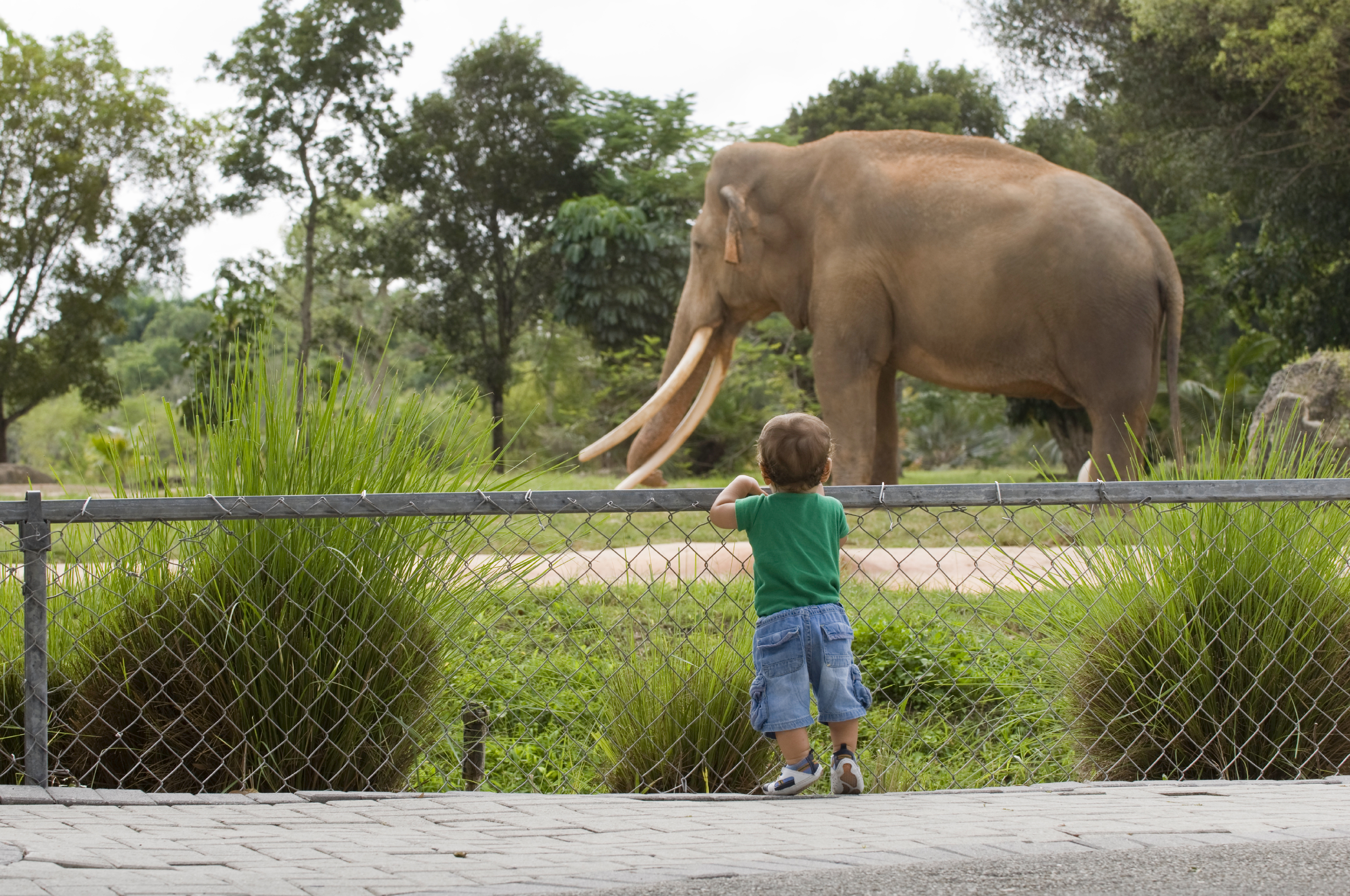
Everyone remembers the day when they were taken to the zoo as a child.  The feeling of happiness that took hold of us as we gazed at majestic and exotic animals while snacking on cotton candy or ice cream is one that we have held onto tightly.  Zoos and aquariums are considered institutions in our society on par with parks, museums, theaters, and libraries.  This is because we get a great thrill by coming face to face with exotic and rare creatures.  But is the entertainment value of such places enough of a reason for them to exist?  All of these establishments rely on captive animals in order to subsist.  If we are to continue to keep these animals away from their natural habitat and lifestyle then zoos must prove that their existence is necessary to our society.  The question that I would like to explore is thus, do organizations like zoos provide enough positive services to both humans and animals to offset the negative impact placed upon the captive animals that these organizations confine?

I think there are three camps of people when it comes to zoos and like places.  There are those that believe that zoos provide essential services to education and conservation, there are those that believe that zoos are unnecessary institutions that profit off of animal cruelty, and there are those that do not think about the subject except to dreamily remember a warm summer's day spent looking at chimpanzees.  Unfortunately, I think most of the population are in this third category and I think that is unfair to the animals that we have kept away from their native homes.  We owe it to these creatures to really explore this question until we have reached a solid conclusion.
Image result for child at zoo
Source: ParentMap

Monday, February 6, 2017

For Help Understanding Animal Behavior, Look to Occam's Razor

A few years ago, while I was still attending college, I attended a talk by the famous animal researcher Dame Jane Goodall.  During the presentation, a video was shown of a captive-born chimpanzee being released into the wild.  The chimpanzee slowly walked out of the small cage that it had been transported in, looked around at the vast jungle that surrounded it, and promptly threw its arms around one of the humans that had brought it to its new home.  Close to where I was sitting, one of my fellow students cooed with delight, "Aw look at that!"  They said, "He's thanking her!"

Internally I cringed, for that person had done what I had always been taught to avoid during my education; they had anthropomorphized an animal's behavior.  Anthropomorphization is the attribution of human qualities, traits, and thoughts to non-humans, often without sound justification.  In this case, the audience member believed that, by hugging, the chimpanzee was thanking the researcher because that is what a human being would do.  In reality, chimpanzees hug when they are stressed and afraid because doing so releases dopamine in the brain and thus relieves stress.  The chimpanzee in the video was terrified due to it being dropped in a foreign jungle and it clung onto a nearby person to calm itself.  The situation is a bit less cute when examined closer, but it is important to understand the reality of animal encounters.

A few weeks ago, I came across a 2010 article by Sara Shettleworth titled, "Clever Animals and Killjoy Explanations in Comparative Psychology".  In the article, Dr. Shettleworth describes her alarm at an increase in anthropomorphization in animal behavior and psychology.  Modern research in those fields have discovered that many animal species possess cognitive and behavioral abilities that were once thought to only be available to humans.  An easy way to understand these newfound abilities is to attribute "human-like" qualities to the species in question.  However this way of thinking is oversimplified.

A stressed chimpanzee being consoled by Jane Goodall
Source: The Daily Mail
By assigning broad and anthropomorphic explanations to phenomena, the researchers and scientific writers are actually stifling further investigation.  The behaviors in question are not enigmatic and mystical facilities but instead complex cognitive abilities that are built upon rudimentary mechanisms.  The anthropomorphic explanations, while they may be exciting headlines for readers, are a disservice to the real fascinating processes at work.

Wednesday, January 11, 2017

Empathy No Longer Sets Humans Apart

Human beings want to believe that we are special.  We fervently cling to the ideas that our cleverness and powerful emotions are something unusual and extraordinary in the natural world.  Unfortunately science does not seem to hold humans in as high esteem.  Evolution, after all, is a completely random and directionless system.  It is also an incredibly connected system and the roots of many behaviors and traits can be found strewn across vast numbers of different species and families.  The more that we look for what makes us special, the more we find that we are not.  In the disciplines of cognition and intelligence especially, the borders that long separated humans and animals are becoming blurred.  Scientists are now finding startling similarities between animal brains and our own.
Image result for incorrect evolution
The historically famous, but incorrect, picture showing evolution having direction and culminating in the creation of man
Source: Unknown

If there is one thing that mankind has been proud of, it is empathy.  We have often bragged about our ability to feel for others and to offer help to those that need it.  Often, our art and literature paints the animal world as cruel and uncaring, while humans alone are able to work together to aid one-another.  Unfortunately for these compelling narratives, cognitive researchers have found empathy to exist in a number of animal species and believe that we are thinking of empathy in the wrong way.  In truth, empathy is a simple neurological process that serves as an internal rewards system for social behaviors.  Humans have deluded ourselves into believing what we were experiencing was some isolated phenomenon unlike any other.  This has clouded how we have viewed the cognitive abilities of our fellow animals.

Saturday, October 1, 2016

The Wildlife Farming Debate

Image result for Poaching
A Tiger-skin rug captured by Anti-poaching authorities
Source: bringbackbigcats.wordpress.com

Poaching and the illegal wildlife trade seem to be unstoppable.  We live in a modern society that is more environmentally conscious than any preceding generation, yet endangered and threatened animals continue to be decimated by the wants and whims of an international market.  Conservationists and law makers are now looking to implement creative approaches to fight the ever-growing illicit industry.  One such approach that has been disputatious is legal wildlife farming.  Many cringe at the mention of those three words put together and dismiss the practice as unethical and unthinkable.  Yet some are suggesting that this bold idea may be the only realistic way to cut at the demand that fuels the poaching business.

Friday, August 26, 2016

New Zealand's Cat Problem


By Riley Schwengel

If you are reading this then hopefully you have already read my piece about the Predator-Free New Zealand by 2050 plan.  If not then I suggest you read that first, as this piece is an addendum of sorts for that article.
Image result for cute cat
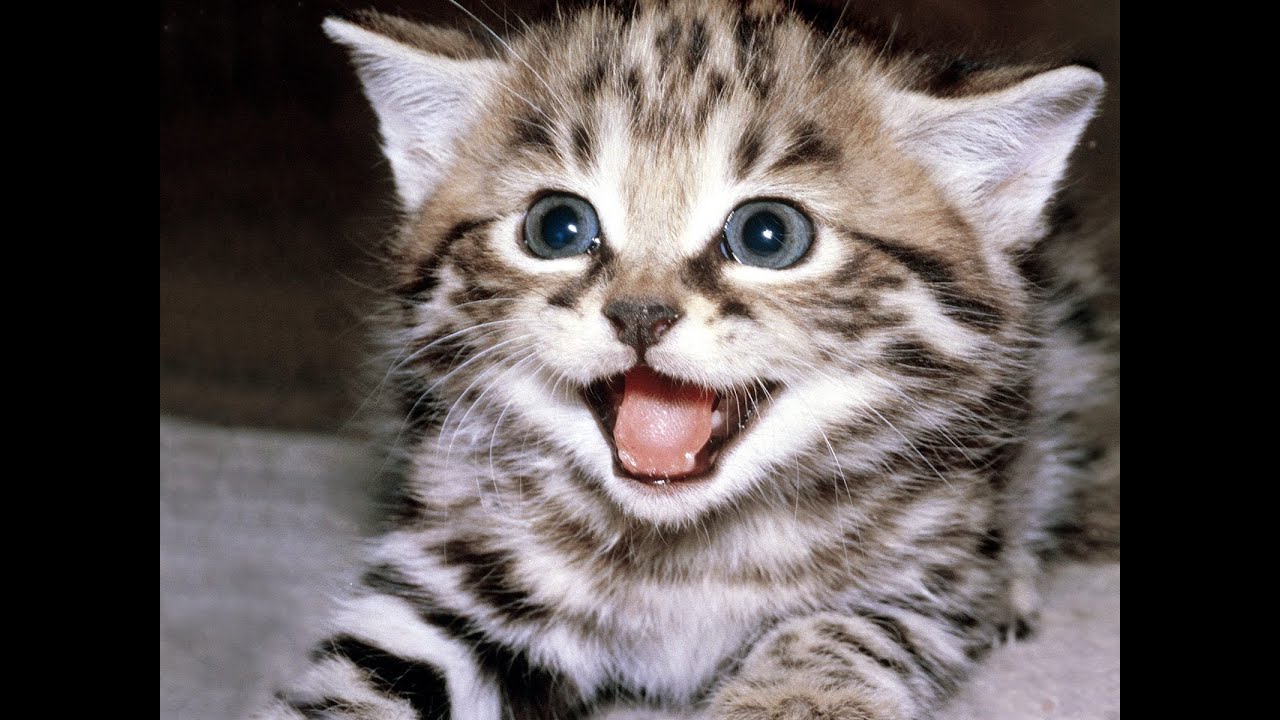
A Ferocious and Damaging Predator
Credit: youtube.com

The Issue with Cats


New Zealand has committed themselves to be completely invasive predator-free by 2050 but the bold plan is inherently flawed because it does little to address one of the most damaging invasive predators in the entire country, domesticated and feral cats.  Although most cat-owners like to think of felines as nothing more than furry companions, domesticated cats are actually proficient hunters who wreak havoc upon native species.  And, while most Kiwis have acknowledged the benefits of having a predator-free country for their native and vulnerable wildlife, they seem unwillingly to make a hard stand about the country's cat population.  This is no small problem as New Zealand is home to 1.4 million domestic, 196,000 strays, and 14 million feral felines (statistics from stuff.co.nz), and has the most cats per capita of any country in the world.

Wednesday, August 17, 2016

Article Link in Pages

Hi All.  I have posted an article I once wrote for a class back when I was at Bucknell on a separate page on this blog.  The reason its on a separate page and not on the main feed is that its a bit more academic in style than the rest of the work I'll be putting up here.

You see, I've been trying to get this paper published in an academic journal but so far have had no luck.  I have gotten a lot of feedback and still have a lot of work to do before I get this paper into a journal.  That being said, I am still really proud of this paper and think its really interesting, thus I've posted it in its current stage here.

If you know anything about the Catskill Mountain Hotels or are interested at all in the early American conservation movement, check it out!  I hope you enjoy and I look forward to putting more work into it and maybe seeing it published in a scholarly journal soon!

Monday, August 15, 2016

A Predator-Free New Zealand by 2050: Can it be Done?

By Riley Schwengel
An Australian Possum: An Invasive Predator in NZ
Credit: Brisbane City Council
            New Zealand’s natural environment has a stellar reputation.  Thanks to its starring roles in movies like “The Lord of the Rings” and "The Lion, the Witch, and the Wardrobe" when people think of the Pacific island nation, they think of crisp alpine mountains, breathtaking waterfalls, and forests that look untouched by the ever encroaching shadow of modernity.  However, despite what Hollywood blockbusters and instagram photos would have you believe, New Zealand’s environment is under constant siege. 

            Before both Europeans and Polynesians arrived on the two main islands that make up the country of New Zealand, or Aoteroa depending on who your ancestors are, they were evolutionarily isolated from all other landmasses for 50 million years.  The result of this isolation is a unique but fragile ecosystem.   Exploration, colonization, and globalization have effectively ended New Zealand’s isolation and the fragile ecosystem that it holds is under attack from a bevy of invasive species.  According to the Predator-Free New Zealand Trust: 81% of native New Zealand birds, 88% of native reptiles, and 72% of freshwater fish are endangered.  That’s a staggering statistic, especially when you consider that only 30% of U.S. bird species are considered endangered, 20% of the world’s reptiles are endangered, and a 40% of U.S. freshwater fish are endangered.